Commercial Storm Damage in Morgan Woods, IN
Morgan Woods Water Restoration documents commercial storm losses in Morgan Woods the way a carrier's reviewer wants to receive and read them.
Need Commercial Storm Damage in Morgan Woods? Morgan Woods Water Restoration answers 24/7 with certified crews, fast on-site response, and documentation built for your insurance claim. Call (765) 703-7292 now.
- Service: Commercial Storm Damage for Morgan Woods homeowners
- Service area: Morgan Woods, IN and surrounding areas
- Response time: Emergency calls from Morgan Woods dispatched immediately, day or night
- Licensed and insured (License #RC21100059)
- Serving Morgan Woods, IN since 2018
Commercial Storm Damage for Morgan Woods Businesses
Ceiling tiles sag, then one lets go, and the water that was sitting in the plenum lands on a tenant's workstations. By then the batt insulation above the grid has been wet long enough to matter. Morgan Woods Water Restoration takes commercial water intrusion calls in Morgan Woods with a two hour dispatch, pulls the saturated tile and insulation, and gets air moving in the plenum before the gypsum above it starts to fail.
Photos get taken the same way on every visit, with a wide view of the room from a marked position and a close up of each reading with the meter in frame. Each image carries the room name and the date. When the file for your Morgan Woods building is reviewed months later, anyone can match a photo to its wall and its reading.
Jobs close on readings. Affected materials in your Morgan Woods building have to match the dry standard taken from an unaffected part of the same structure, measured with the same meter on the same scale. Equipment comes out after that, final readings go in the file with the photos, and a punch walk with the property manager sets what reconstruction still owes.
The carrier's estimate and the mitigation invoice are built differently, so the totals can differ even when both describe the same work. When a line is questioned, the readings and photos behind it answer the question. You and your broker decide how to respond, and Morgan Woods Water Restoration explains any line of the Morgan Woods scope in writing.
On a wet floor plate, the first call sets up everything after it. Morgan Woods Water Restoration dispatches to Morgan Woods, IN commercial losses day or night with crews and equipment sized to the floor. You can forward the daily readings to your adjuster as the drying runs.
Signs You Need Commercial Storm Damage Restoration
If you notice any of these in your Morgan Woods building, schedule a free inspection before the issue worsens.
Wet or stained carpet along an interior column line with no plumbing fixture anywhere near it
Damp, darkened flooring in a band just inside the main entrance after a windy rain
Vinyl tile or glue down carpet lifting at the seams out in the middle of a floor plate
Breakers tripping in a mechanical room or electrical room that sits under a roof penetration
Corrosion on a fire sprinkler line or head where the pipe runs close to the roof deck
Water beading on the inside of curtain wall mullions or collecting on the sill
Cardboard cartons on the bottom pallet positions that have darkened and gone soft
Mechanical room floor drains that fill during heavy rain and empty slowly afterward
Carpet tile that squishes underfoot along the glass line of a storefront or window wall
Brown water stains on the ceiling around a rooftop unit's duct drop after each rain
How Morgan Woods Water Restoration Handles Commercial Storm Damage
We follow these steps in order on every Morgan Woods job.
Moisture Mapping
Every affected space gets walked with thermal imaging and both penetrating and nonpenetrating meters. Readings are keyed to a floor plan by room or column line, so the scope covers where the water went and leaves dry areas alone.
Water Category Call
Rain that started clean can worsen in category as it sits, so the crew classifies the water as it entered and again as it has aged. That call sets which materials get cleaned in place and which come out.
Occupied Space Planning
Suites and corridors that must stay in service get marked on the plan before any equipment is staged, along with where the barriers go. The loud work is scheduled for hours when the space is empty.
Cavity Inspection Openings
Where meters or thermal imaging point to hidden water, the crew opens a small inspection hole or lifts a tile. What the probe finds inside decides how much larger the cut needs to be.
Structural Drying Setup
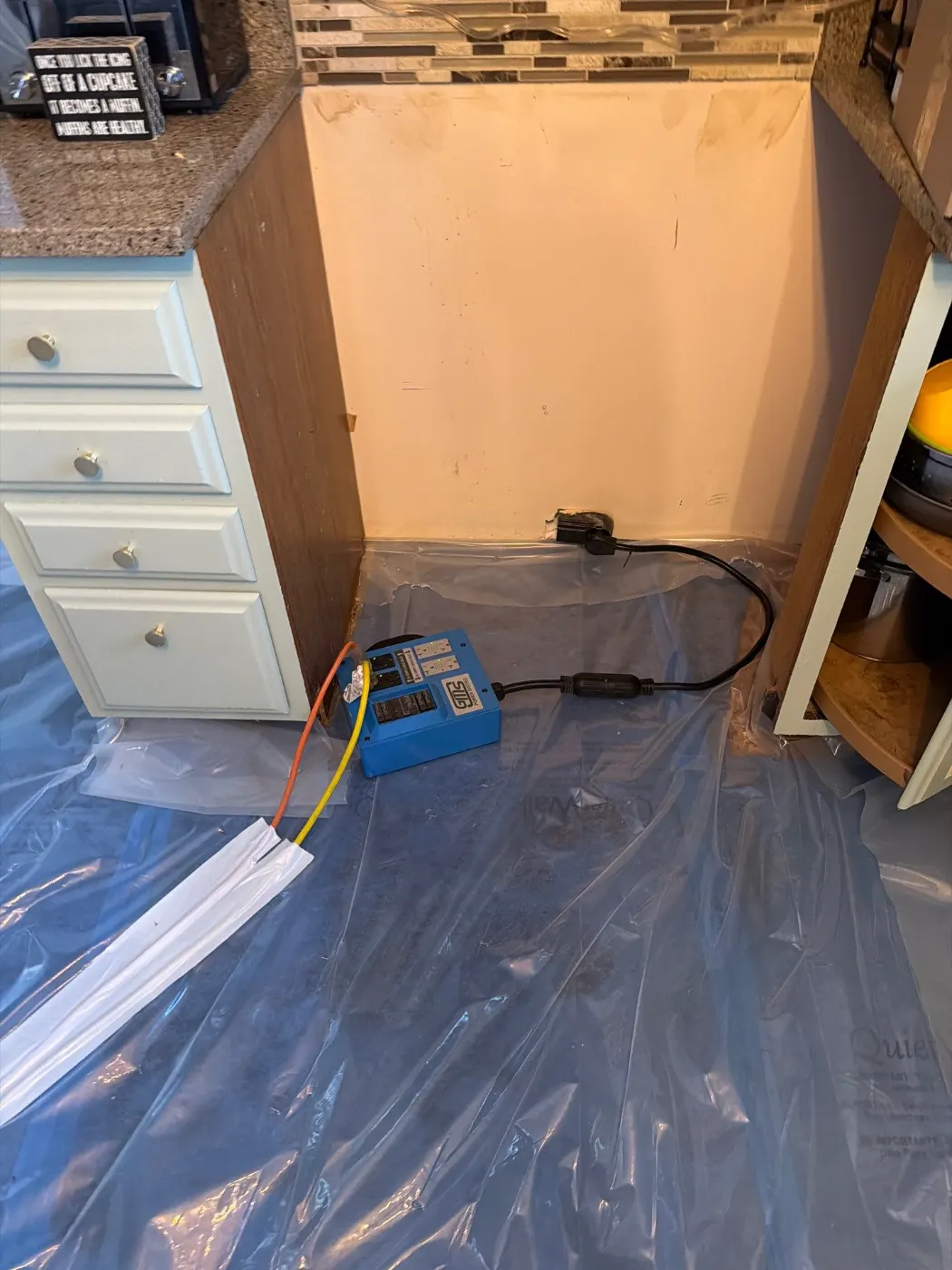
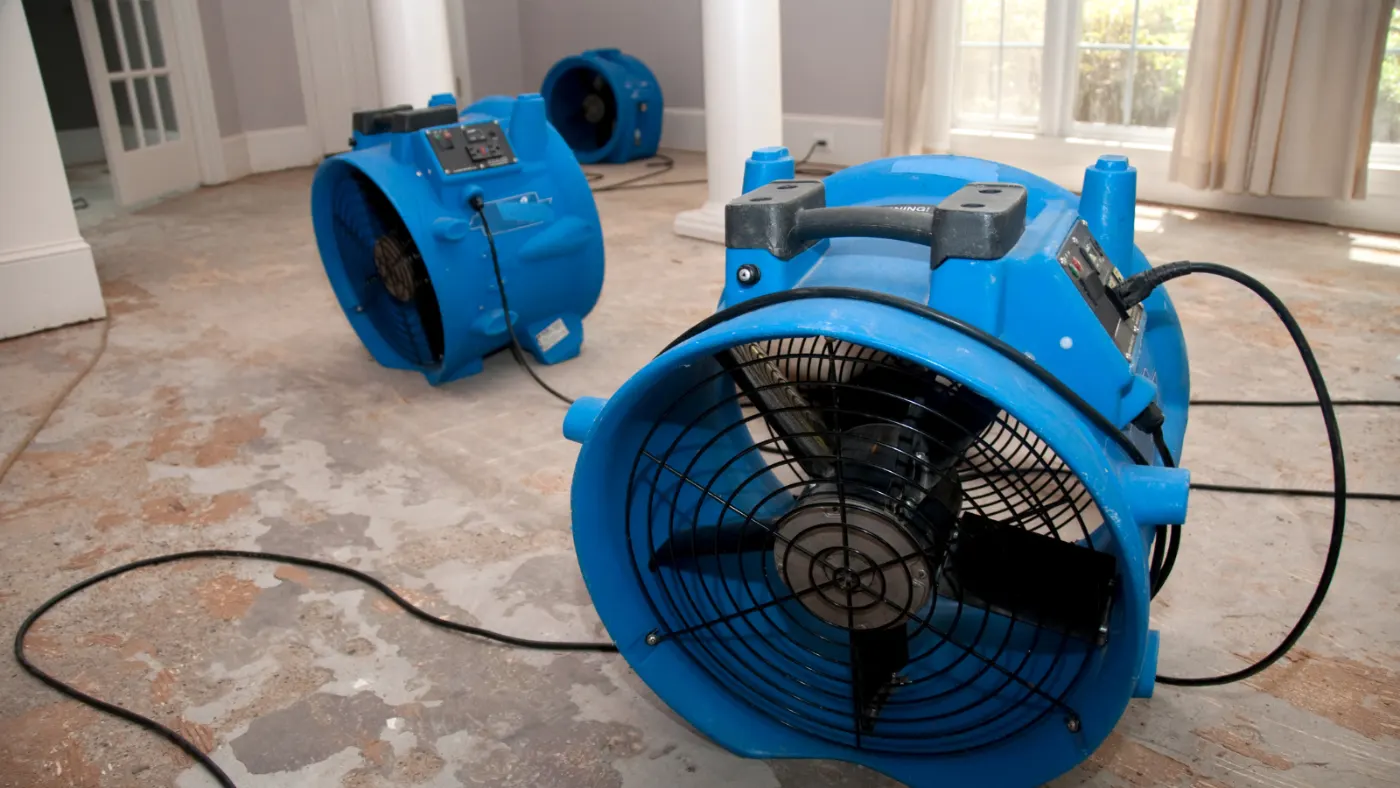
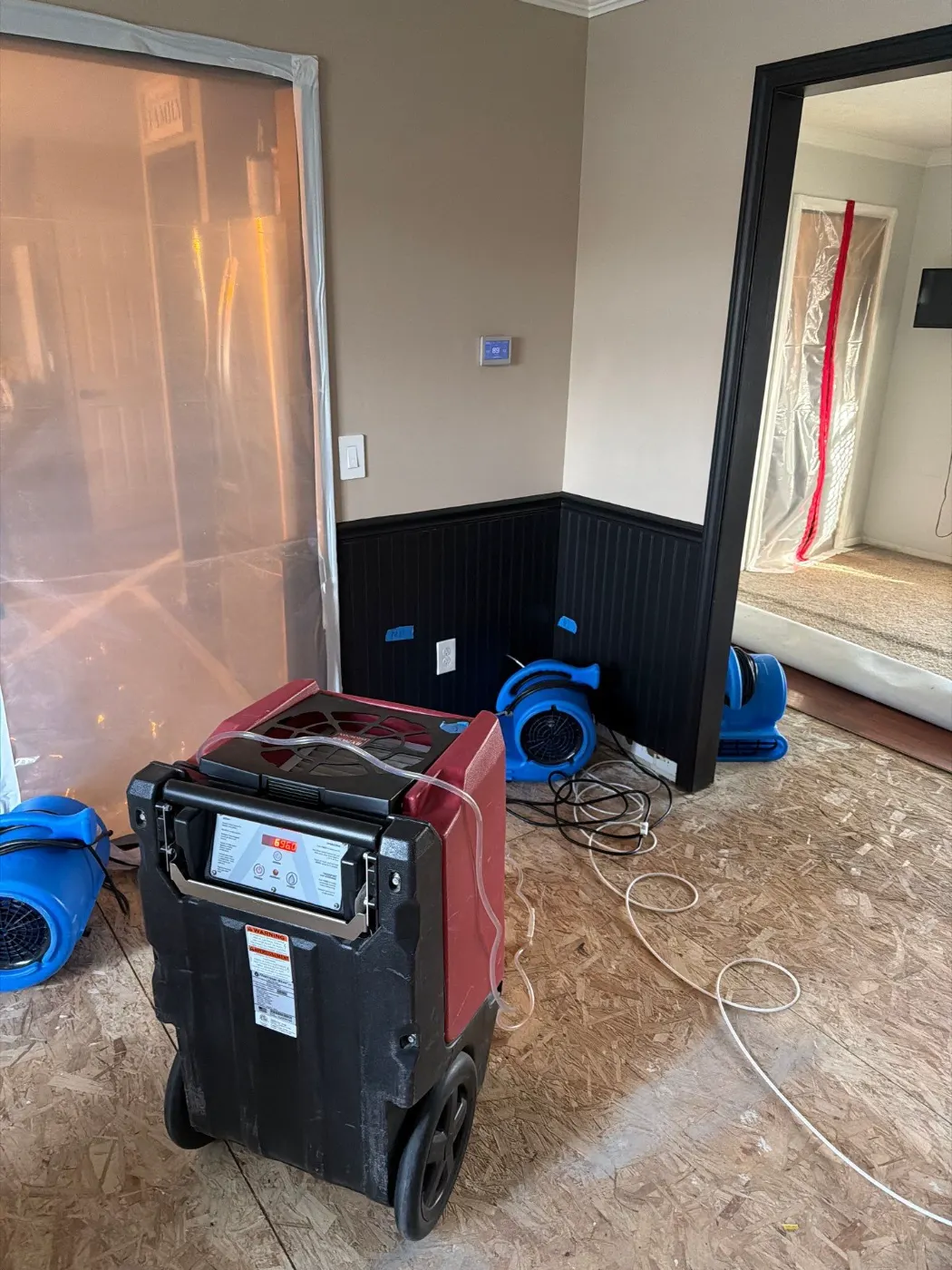
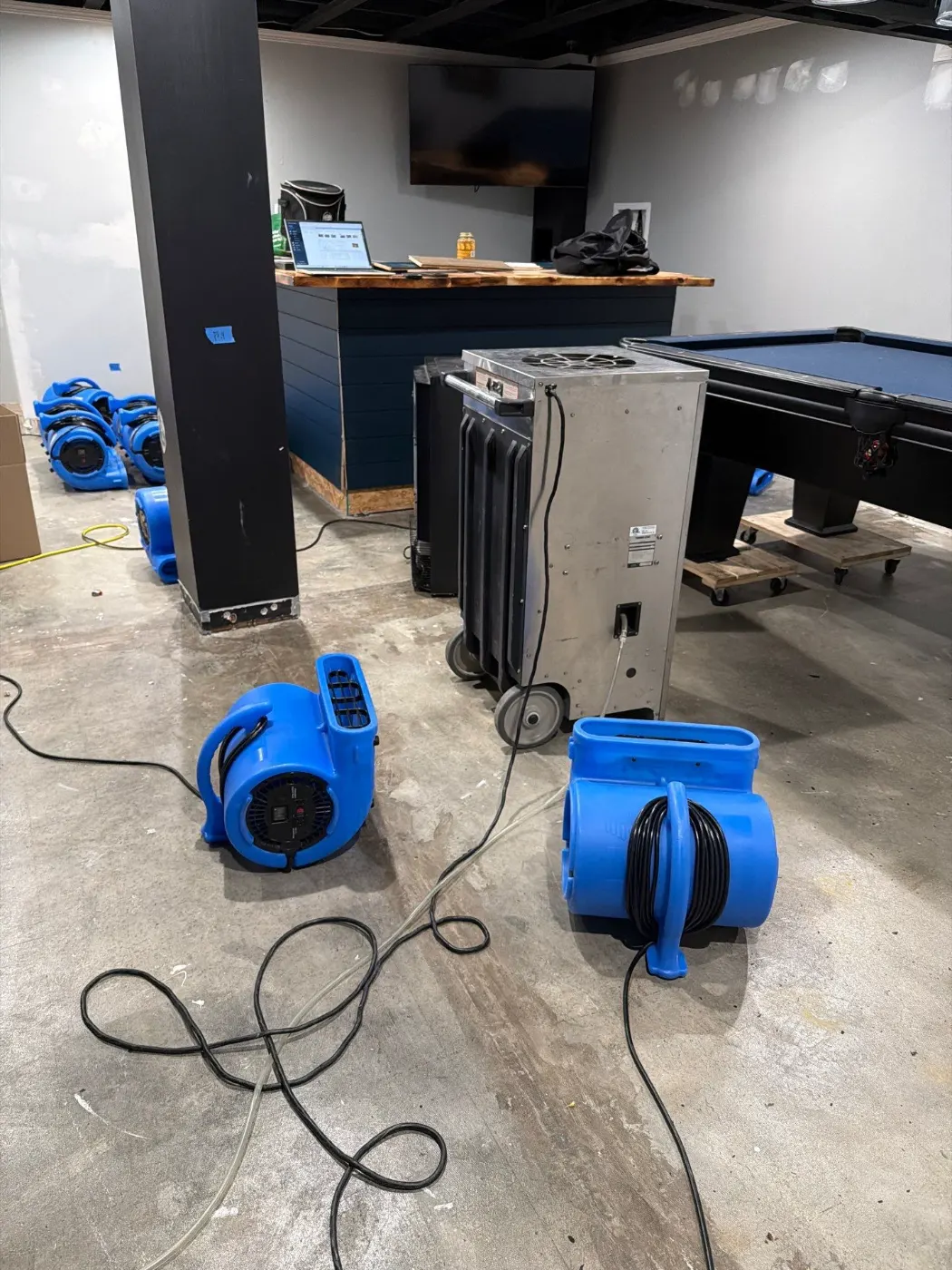
Dehumidification is sized to affected cubic footage, desiccant for open floor plates and refrigerant units for enclosed suites. Air movers go in at calculated angles. The crew checks available amperage and brings distribution or generator power when building panels can't carry the load.
Commercial Storm Damage in Morgan Woods
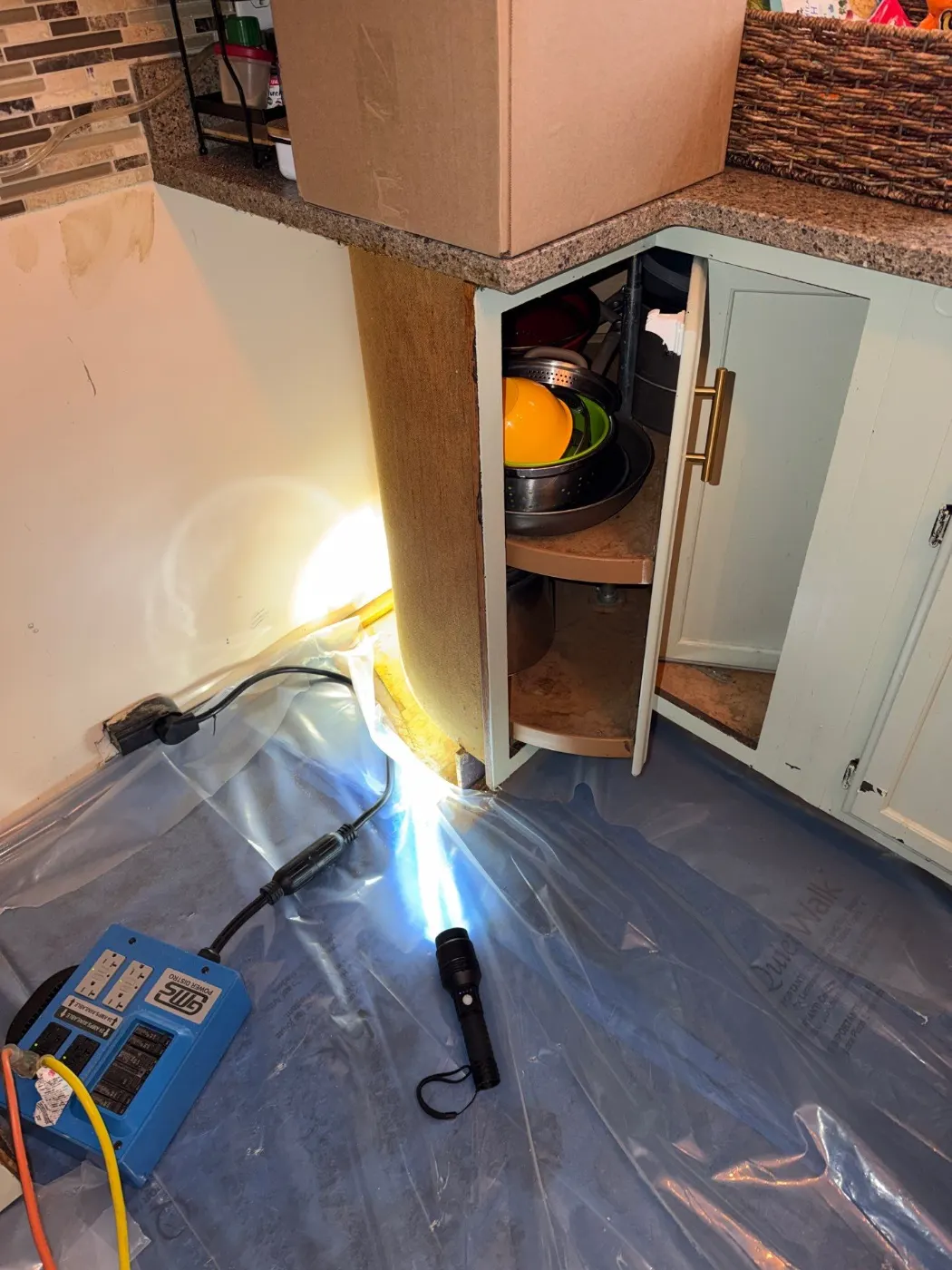
Photographs from real commercial storm damage jobs completed by our crew in Morgan Woods and surrounding areas.
Commercial Storm Damage FAQ
Questions Morgan Woods property managers ask us about commercial storm damage restoration.
Guidance and Standards for Commercial Storm Damage
- The National Weather Service office in Indianapolis posts summaries of recent central Indiana storm and flood events. NWS Indianapolis Event Summaries
- The ANSI/IICRC S500 is the published standard for professional water damage restoration. The current edition is the Fifth Edition, 2021. IICRC S500 Standard
Other Restoration Services in Morgan Woods
Morgan Woods Water Restoration handles the full scope of restoration work. Explore our other services below.
Water Damage Restoration in Morgan Woods
24/7 emergency response. IICRC certified water restoration from extraction to full dry out.
Learn more →Basement Flooding in Morgan Woods
Basement water emergencies handled fast. Extraction, drying, mold prevention.
Learn more →Sewage Cleanup in Morgan Woods
Category 3 biohazard cleanup. Full containment, decontamination, structural restoration.
Learn more →Request Commercial Storm Damage Restoration
Reach Us Directly
Our team is available 24/7 for emergencies and ready to schedule inspections during business hours.
Need Immediate Help?
For active water or mold emergencies, call us directly. We are available 24/7.